PSHE
PSHE and Relationships, Sex and Health Education (RSHE) at Waterside Academy
At Waterside Academy, we recognise the importance of Personal, Social, Health and Economic (PSHE) education in preparing our pupils for life both within and beyond school. Our PSHE curriculum aims to equip pupils with the knowledge, skills and confidence to make informed decisions, develop healthy relationships, maintain their physical and emotional wellbeing and become responsible members of society.
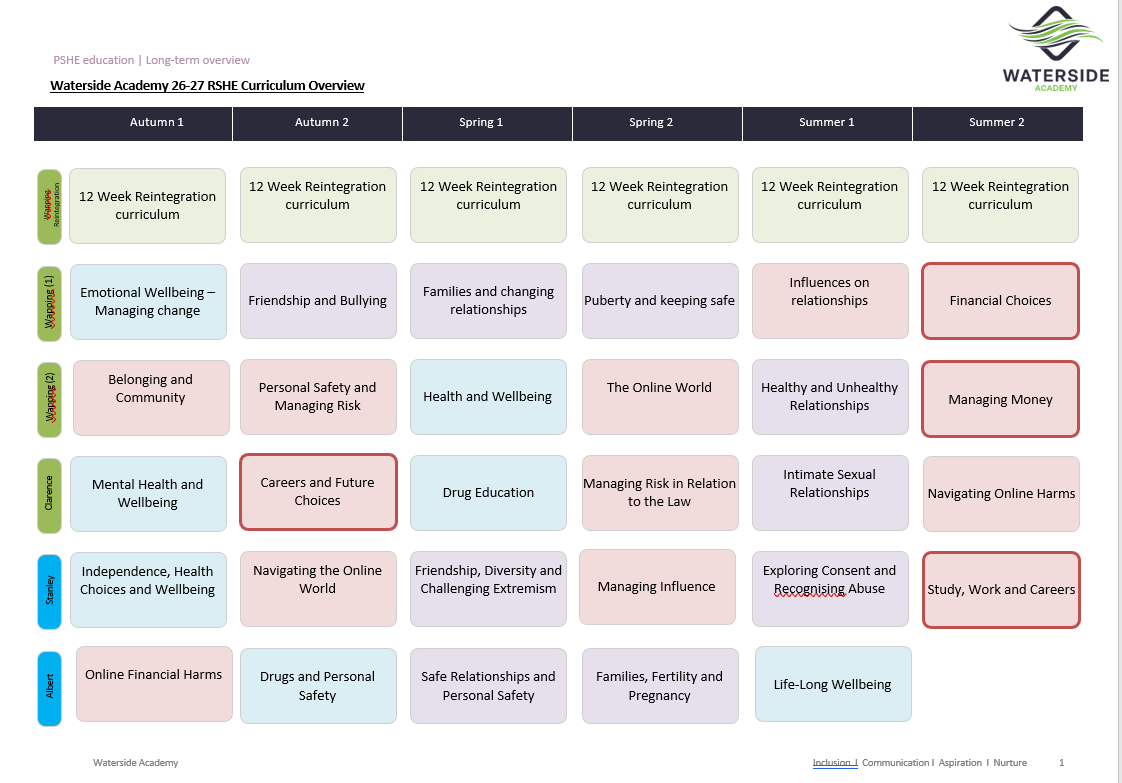
Relationships, Sex and Health Education (RSHE) is an important part of our PSHE curriculum. In line with the Department for Education's statutory guidance, our curriculum covers a range of topics including healthy relationships, consent, personal safety, online safety, physical and mental health, and preparation for adulthood. These topics are carefully sequenced to ensure pupils develop their knowledge and understanding as they progress through Key Stages 3 and 4.
As an alternative provision, we recognise that our pupils have a diverse range of experiences, needs and starting points. Our curriculum is therefore designed to be inclusive, accessible and responsive, with teaching adapted to meet individual needs, including those of pupils with Special Educational Needs and Disabilities (SEND) and Social, Emotional and Mental Health (SEMH) needs. We aim to provide a safe, supportive learning environment where pupils feel confident asking questions, exploring important issues and developing the skills needed to make positive choices.
Working in Partnership with Parents and Carers
At Waterside Academy, we recognise that parents and carers are essential partners in supporting young people's personal, social and emotional development. We are committed to maintaining open communication with families and ensuring that parents and carers are informed about the content and delivery of our PSHE and Relationships, Sex and Health Education (RSHE) curriculum.
We value parental feedback and provide opportunities for parents and carers to contribute to the ongoing review and development of our curriculum. This includes regular consultation opportunities, parental surveys and discussions through our Parent Forum. These opportunities allow families to share their views, ask questions and help shape an inclusive curriculum that reflects the needs of our school community.
We understand that some aspects of RSHE may involve sensitive topics. We aim to ensure that parents and carers feel confident about what their children are learning and understand how topics are approached in an age-appropriate and sensitive manner.
Parents and carers are welcome to contact the school at any time to discuss the curriculum, request further information about lesson content or raise any questions or concerns. Please call the school office to arrange further discussion should you want to know more about our curriculum.
Further information about our RSE curriculum, including parental rights regarding withdrawal from sex education, can be found in our RSE Policy.
The curriculum overview below outlines what pupils will learn and when as part of their journey at Waterside Academy.
Supporting your child at home
At Waterside Academy, we believe that learning about personal development, healthy relationships and wellbeing extends beyond the classroom. Parents and carers play an important role in helping young people develop the confidence, knowledge and skills needed to navigate the challenges of growing up.
We recognise that conversations about relationships, mental health, online safety and other aspects of PSHE can sometimes feel challenging. We encourage families to have open, honest and age-appropriate conversations with their children, providing opportunities for them to ask questions, share concerns and seek guidance.
To support families, we have provided links to a range of trusted organisations offering practical advice, information and resources on topics including:
-
Mental Health and Wellbeing: Supporting young people to understand and manage their emotions, build resilience and access support when needed.
-
Online Safety: Helping children and young people stay safe online, recognise potential risks and develop responsible digital habits.
-
Healthy Relationships: Supporting discussions about respect, boundaries, consent and positive relationships.
-
Physical Health and Puberty: Providing guidance on physical development, healthy lifestyles and the changes experienced during adolescence.
-
Personal Safety: Helping young people recognise unsafe situations, understand their rights and know where to seek help.
We encourage parents and carers to explore the resources below and contact the school if they would like further guidance or support.
Useful Resources for Parents and Carers
PSHE Association – The national professional body for Personal, Social, Health and Economic (PSHE) education. Provides information and guidance about PSHE education, including relationships, health and wellbeing, and living in the wider world. Offers resources to help parents and carers understand the importance of PSHE and support their children's learning at home.
https://pshe-association.org.uk
NSPCC – Advice on keeping children safe, healthy relationships and recognising potential safeguarding concerns.
YoungMinds – Information and practical guidance for parents supporting their children's mental health and emotional wellbeing.
Childnet – Resources to help families understand online risks and promote safe, responsible internet use.
Brook – Information about healthy relationships, puberty, consent and sexual health.
CEOP Education – Guidance and resources to help parents protect children and young people from online sexual abuse and exploitation.
https://www.ceopeducation.co.uk
Childline – Free, confidential advice and support for children and young people who may need someone to talk to.